


Wedding Dessert Ideas: Cake Alternatives and Mini Desserts
A traditional wedding cake can be beautiful, but it is no longer the only way to end your reception on a sweet note. Many couples are choosing dessert tables filled with cupcakes, cookies, pastries, and bite-sized treats instead.
A large dessert display can feel exciting, generous, and personal. It also gives guests more choices, especially when several flavors and textures are included. Some guests may want chocolate, while others may prefer fruit, caramel, or something light.
Even a simple table of cupcakes can become a stunning part of the reception when it is arranged with care. However, mini desserts are where the real fun begins. They allow guests to sample more than one treat without committing to a full slice of cake.
Why Couples Are Choosing Wedding Cake Alternatives
Wedding traditions are becoming more personal. Therefore, couples are being encouraged to choose desserts they truly enjoy rather than ordering a large cake simply because it is expected.
A dessert table can be shaped around your favorite sweets, family recipes, heritage, season, or first date. It can also be made more flexible for guests with different tastes.
Cake alternatives may include:
- Cupcakes in several flavors
- Mini cheesecakes
- Dessert shooters
- Brownie bites
- Small fruit tarts
- Cookies
- Cannoli
- Mini pies
- Doughnuts
- Macarons
- Chocolate-covered strawberries
- Rice crispy treats
- Whoopie pies
- Cake pops
- Mini cinnamon rolls
Several types of dessert may be combined, or one favorite treat may be presented in different flavors.
Mini Desserts Create More Variety
One of the biggest benefits of mini desserts is variety.
Instead of choosing one or two cake flavors, couples can offer several different treats. A guest may enjoy a mini cheesecake, try a chocolate mousse cup, and take a cookie for later.
Because the portions are smaller, guests are more likely to sample something new. The dessert experience becomes playful and memorable rather than limited to one slice.
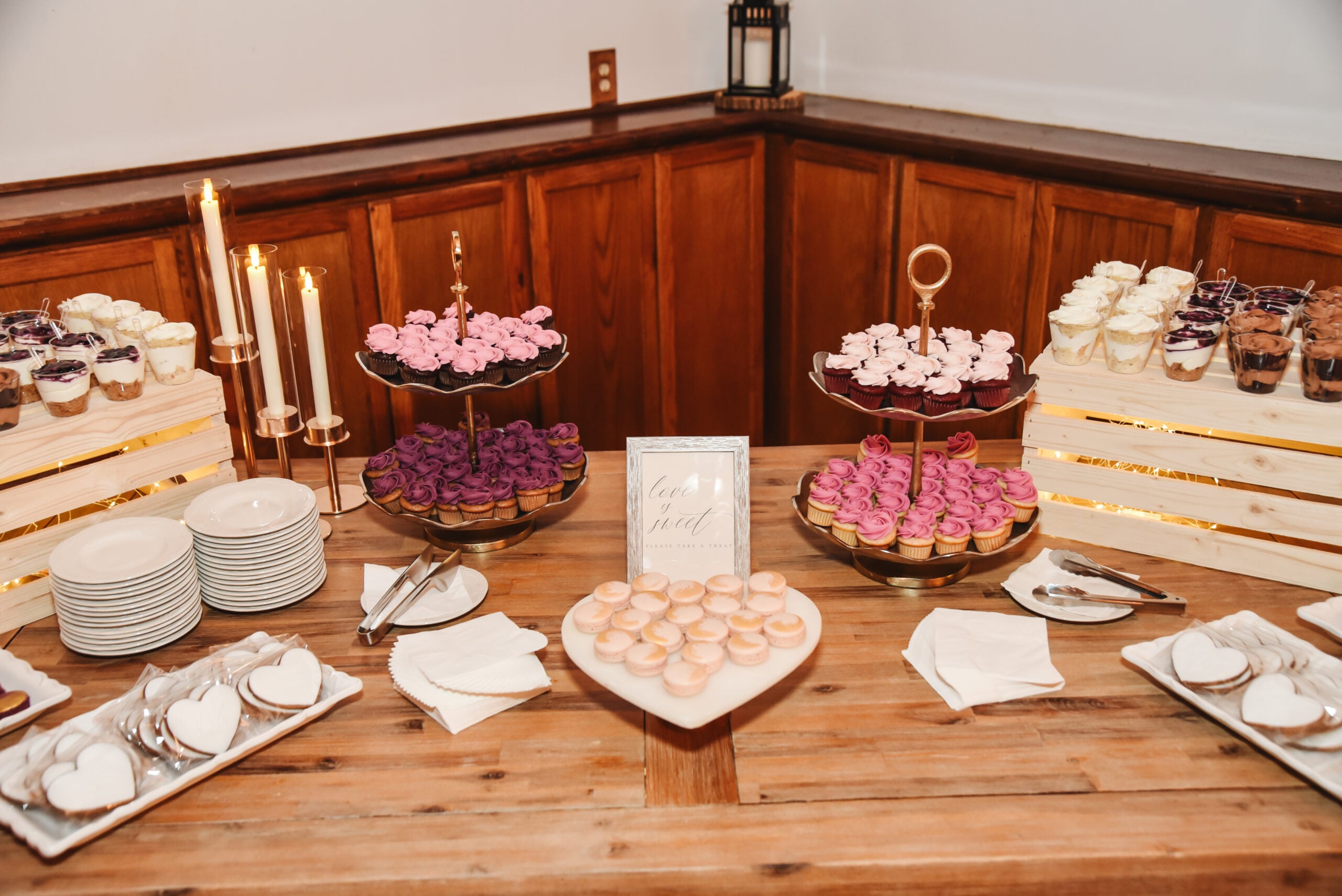
For a whimsical Pennsylvania wedding venue, colorful pastries and creative displays can add even more personality to the reception. Mini desserts may be arranged on vintage trays, tiered stands, wooden risers, or mismatched cake plates to create a charming and joyful display.
The table does not need to be filled with expensive specialty desserts. A mix of simple and detailed items often works best. Cupcakes, cookies, and brownies can be paired with a few more decorative treats for balance.
A Big Dessert Table Can Still Be Simple
A dessert table does not need dozens of complicated options to make an impression.
Even cupcakes can create a full and beautiful display when several flavors, frosting styles, and heights are used. For example, vanilla, chocolate, red velvet, and lemon cupcakes may be arranged across stands of different sizes.
A small cutting cake may also be placed in the center. This allows the traditional cake-cutting moment to be kept without ordering enough cake for every guest.
Additional details may include:
- Fresh flowers
- Greenery
- Small signs
- Candles
- Cake stands
- Vintage trays
- Family dessert recipes
- Framed photos
- Personalized napkins
- A menu listing each flavor
However, the desserts should remain the focus. Too much decor can make the table crowded and difficult for guests to use.
Match the Dessert Table to the Venue
The style of the dessert display should feel connected to the rest of the wedding.
At a barn wedding venue in Berks County, a dessert table may feel especially warm when wooden stands, linen, stoneware, or vintage serving pieces are used. A restored barn, countryside setting, and historic details can create a beautiful background for cakes, pastries, and handwritten signs.
For a formal wedding, glass stands and matching trays may be used. For a relaxed garden celebration, baskets, wood boards, and colorful flowers may feel more natural.
The table should also be placed somewhere visible. If desserts are hidden in a distant corner, fewer guests may notice them. Still, the display should not block the dance floor, bar, or main walkway.
Think About How Guests Will Eat Each Dessert
A dessert may look beautiful, but it should also be easy to serve and eat.
Mini desserts are often a good choice because plates and forks may not always be needed. However, very sticky, fragile, or messy treats can become difficult to manage during a reception.
Before selecting each item, consider:
- Can it be eaten in one or two bites?
- Does it require a fork or spoon?
- Will it melt in a warm room?
- Does it need refrigeration?
- Can it sit out safely?
- Will crumbs or filling fall onto formal clothing?
- Can guests easily identify the flavor?
- Does it contain a common allergen?
Dessert shooters should be served with small spoons. Cupcakes may need napkins or small plates. Cookies and brownies can be placed in individual wrappers to keep the table neat.
Include Different Flavors and Textures
A strong dessert table should offer more than different versions of the same type of sweet.
For example, a table filled only with rich chocolate desserts may feel heavy. Instead, a balance of chocolate, fruit, vanilla, caramel, and lighter options may be offered.
Texture can also create variety. Consider including something:
- Creamy, such as cheesecake or mousse
- Crisp, such as cookies or macarons
- Soft, such as cupcakes or brownies
- Fruity, such as tarts or lemon bars
- Familiar, such as chocolate chip cookies
- Unexpected, such as mini doughnuts or cannoli
This approach helps more guests find something they enjoy.
Plan the Right Amount of Dessert
When several mini desserts are offered, guests may take more than one.
A general starting point is two to three mini desserts per guest. However, the final amount should be based on the size of the treats, number of options, and whether another dessert will also be served.
If a full slice of cake is being served, fewer mini desserts may be needed. If the dessert table is the only sweet course, more pieces should be planned.
It may also be helpful to order extra if take-home containers will be provided. Guests may enjoy dessert at the reception and pack another treat for later.
Your venue, baker, or dessert vendor can help estimate the correct amount based on the menu and guest count.
Use To-Go Containers as a Wedding Favor
Take-home dessert containers are one of the easiest ways to turn the dessert table into a favor.
Small paper bags, bakery boxes, or clear containers may be placed beside the display. Guests can choose a cookie, cupcake, brownie, or other treat to enjoy later.
This can help reduce waste while giving guests something they will actually use. Instead of taking home a generic item, they leave with a sweet reminder of the celebration.
The containers may be personalized with:
- A thank-you sticker
- Your names and wedding date
- A short message
- A custom stamp
- A ribbon in your wedding colors
- A playful phrase such as “Love is sweet”
However, the packaging does not need to be expensive. A simple kraft bag with a small thank-you label can still feel thoughtful and polished.
Add a Meaningful Family Dessert
A dessert table can become even more special when a family recipe or tradition is included.
Perhaps a grandparent was known for making a certain cookie. Maybe one partner grew up eating a specific pie during the holidays. A cultural dessert may also be shared with guests.
A small sign can explain the story behind the treat. This makes the dessert feel like part of your relationship rather than simply another menu item.
Homemade items should always be discussed with the venue first. Food safety rules, preparation requirements, and display policies may need to be followed.
Do Not Forget Dietary Restrictions
Dessert options should also be considered for guests with allergies or dietary restrictions.
A gluten-free, dairy-free, vegan, or nut-free item may be offered when needed. These desserts should be labeled clearly and kept separate when cross-contact is a concern.
Guests with severe allergies may be given an individually packaged dessert instead of choosing from the shared table.
Dietary information should be collected through the RSVP and shared with the venue or dessert vendor in advance.
Choose Desserts That Feel Like You
The best wedding dessert is not always the largest or most expensive option. It is the one that feels personal, delicious, and connected to your celebration.
You may love the elegance of mini cheesecakes and macarons. You may prefer a table overflowing with family cookies. Perhaps cupcakes are your favorite, or doughnuts remind you of weekend mornings together.
At Bally Spring Inn in Barto, Pennsylvania, dessert displays can become part of the full wedding experience. A thoughtful table may be created inside the historic estate, filled with sweet details that guests can enjoy during the celebration and take home afterward.
Whether you choose one beautiful cake, dozens of mini desserts, or a little of both, the goal is the same. Your guests should leave feeling welcomed, delighted, and full of sweet memories from a day that felt completely your own.
Photo by Little Wing
Leave a reply
Spring Brunch Wedding Reception Ideas for a Relaxed Celebration
A spring brunch wedding reception can feel fresh, joyful, and beautifully relaxed. Instead of
Buffet, Plated, or Family Style: What Works Best for Your Wedding?
Choosing how dinner will be served can shape the entire feeling of your wedding
How to Plan a Wedding Menu for Allergies and Dietary Restrictions
Learn how to plan a safe, inclusive wedding menu for food allergies, vegetarian guests,
Should We Do a Signature Cocktail for Our Wedding?
Should you do a signature cocktail? Explore wedding drink ideas, naming tips, and how