


How Many Hours of Wedding Photography Coverage Do You Really Need?
Choosing a wedding photographer is exciting, but deciding how many hours of coverage you need can feel confusing. Some couples are told that eight hours is standard, while others are encouraged to book ten or even twelve. However, the right amount of time depends on your timeline, your priorities, and the moments you truly want to remember.
Not every part of the day needs to be photographed. Some couples want every detail captured from the first cup of coffee to the final dance. Others care most about the ceremony, family portraits, and a few joyful reception moments.
Before choosing a package, think about what you want your final gallery to include. Once those priorities are clear, the correct amount of coverage can be planned more easily.
Start With the Moments You Actually Want Photographed
Photography coverage should be based on your real wedding day, not a generic schedule.
Begin by making a list of the moments that matter most to you. Then, mark the parts of the day you do not need photographed.
For example, you may want:
- Detail photos of the dress, rings, shoes, and invitations
- Final hair and makeup moments
- A first look
- Wedding party portraits
- Family photos
- The ceremony
- Cocktail hour
- Grand entrances and special dances
- Speeches and dinner
- Cake cutting
- Open dancing
- A private last dance or send-off
You do not need every item on this list. Instead, your photographer’s time should be spent on the memories that feel personal and meaningful to you.
Decide Whether You Want Getting Ready Photos
Getting ready photos can be beautiful, emotional, and full of anticipation. Still, not everyone wants to be photographed early in the morning.
Some people feel uncomfortable having photos taken before their hair and makeup are complete. You may not want pictures in pajamas, without makeup, or while the room is still being organized. That is completely okay.
Instead of asking your photographer to arrive at the start of hair and makeup, coverage may begin during the final touches. This still allows photos to be taken of the dress, jewelry, invitations, and meaningful details. A few portraits can also be captured once everyone feels comfortable and ready.
For couples comparing wedding venues near the Lehigh Valley, on-site getting ready spaces can make this part of the timeline easier. When both partners are preparing at the venue, travel time may be reduced and more photography can be completed within the same number of hours.
Plan More Time for a First Look
A first look can create a quiet and emotional moment before the ceremony. It may also allow many portraits to be completed early.
However, a first look often requires the photographer to arrive earlier than couples expect.
Before the first look can happen, details may need to be photographed, final getting ready photos may be taken, and each partner may need a few individual portraits. Then, the first look itself should be given enough time to feel genuine instead of rushed.
Afterward, couple portraits, wedding party photos, and some family pictures may be completed. Therefore, the photographer may need to arrive several hours before the ceremony.
A first look can save time after the ceremony, but it does not always reduce the total amount of photography coverage needed. Instead, the hours may simply be moved earlier in the day.
Estimate How Long Family Photos Will Take
Family portraits are often one of the hardest parts of the timeline to estimate.
A small group of immediate family members may be photographed quickly. However, larger families, blended families, young children, grandparents, or several requested combinations may require more time.
As a general planning rule, each family photo combination may take a few minutes. That includes finding the correct people, arranging the group, checking clothing, taking several images, and moving to the next combination.
The process can be made easier when:
- A complete family photo list is created before the wedding
- Names are used instead of general labels
- A family member or wedding party member helps gather people
- Guests are told where to wait after the ceremony
- The most important photos are completed first
- The number of combinations is kept realistic
For example, “couple with immediate family” is helpful, but “couple with Sarah, Michael, James, and Linda” is even clearer.
At many Reading area wedding venues, beautiful outdoor backgrounds may be used for family portraits. Still, a weather backup and indoor photo location should be discussed in advance so time is not lost if conditions change.
Think About Travel Between Locations
Travel time is part of photography coverage.
If getting ready, the ceremony, portraits, and the reception are held in different locations, those drives must be included in the package. A photographer may spend thirty minutes traveling without taking a single photo.
This is one reason on-site wedding weekends can feel more relaxed. When getting ready spaces, ceremony locations, portrait areas, and the reception are all located on one property, less time is lost in the car.
However, even at one venue, walking time should be considered. Moving a full wedding party across a large estate may take longer than expected. Therefore, a few transition minutes should be added between locations.
Decide How Much Reception Coverage You Need
Many couples automatically assume the photographer should stay until the reception ends. In reality, that may not be necessary.
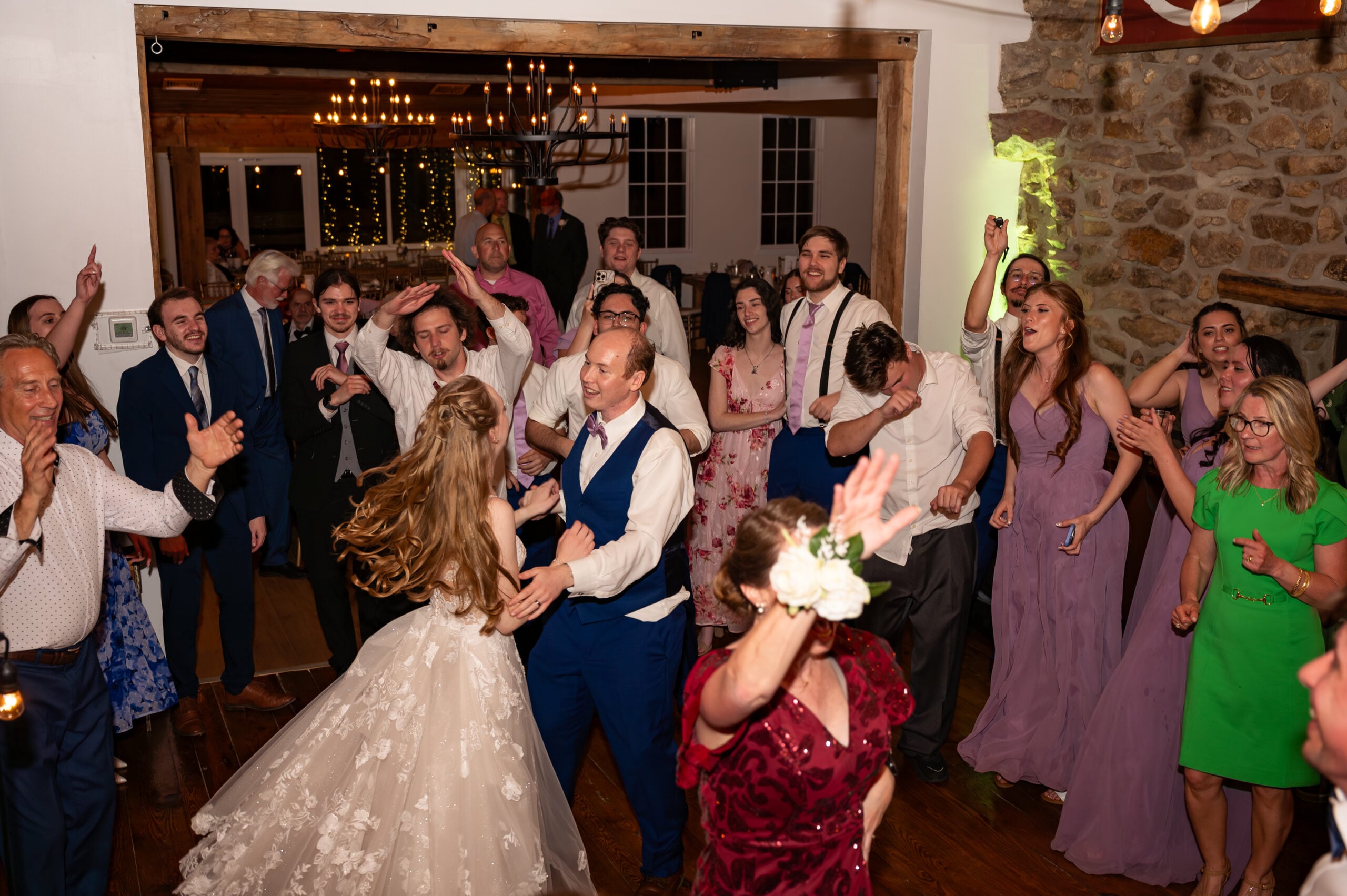
Most reception traditions happen earlier in the evening. Grand entrances, first dances, parent dances, speeches, dinner, and cake cutting may all be completed within the first few hours.
Once open dancing begins, a strong collection of dance floor photos can often be captured within thirty to sixty minutes. After that, the images may begin to look similar.
You may not need late-night coverage if:
- There is no planned send-off
- You are not doing a private last dance
- No late-night surprise is planned
- You do not need several hours of dance floor photos
- The photographer has already captured the main reception traditions
In that case, coverage may end after cake cutting or after the dance floor has been photographed.
Consider Whether You Need a Send-Off Photograph
A dramatic send-off can be a beautiful final image. However, the photographer must still be present when it happens.
If a sparkler send-off, cold spark display, glow-stick exit, or formal final departure is planned at the end of the night, additional coverage may be needed.
Still, many couples are not doing a send-off. Guests may be staying on-site, moving to a bonfire, or simply leaving at different times. In that case, paying for photography until the very end may not provide much value.
Some couples choose to stage an earlier send-off with the wedding party or a small group of guests. This allows the moment to be photographed before the photographer leaves. It should be discussed honestly with your photographer so the image feels organized and safe.
Understand Common Photography Packages
Although every photographer is different, wedding coverage is often offered in common time blocks.
Six Hours of Coverage
Six hours may work for a smaller or simpler wedding. It may cover the ceremony, portraits, and the first portion of the reception.
However, getting ready photos or late-night moments may need to be skipped.
Eight Hours of Coverage
Eight hours is a common choice for a full wedding. It may include final getting ready photos, the ceremony, portraits, and key reception traditions.
This amount often works well when the wedding is held at one location and the timeline is organized carefully.
Ten Hours of Coverage
Ten hours may be helpful when a first look is planned, travel is required, the family photo list is large, or a later reception moment must be captured.
It can also create more breathing room so the day does not feel overly scheduled.
Full-Day Coverage
Full-day coverage may begin early and continue through the end of the reception. It is best for couples who want a complete story of the wedding day, including quiet morning moments and the final celebration.
However, it may not be needed when only the major events are important.
Add Buffer Time to the Schedule
Wedding days rarely run exactly on time.
Hair and makeup may take longer than expected. A family member may be missing from portraits. Transportation may be delayed. Buttons, ties, veils, and flowers may require last-minute attention.
Therefore, buffer time should be added throughout the photography schedule.
Even ten extra minutes between major events can protect the day from feeling rushed. Your photographer and coordinator can help identify where those small breaks should be placed.
A relaxed timeline often leads to better photos. When couples are not being hurried from one location to another, more natural emotions can be captured.
Ask Your Photographer the Right Questions
Before choosing a photography package, ask how the photographer typically builds a timeline.
Helpful questions include:
- How much time do you recommend for getting ready photos?
- How early should you arrive for a first look?
- How long should be allowed for family portraits?
- How much reception dancing do you usually photograph?
- Do you charge for travel between locations?
- Can extra coverage be added later?
- Will you help create the final photo timeline?
- What happens if the wedding runs behind schedule?
An experienced photographer should be able to explain how your priorities fit into the available hours.
Build Coverage Around Your Memories
There is no perfect number of wedding photography hours for every couple.
You may need six hours because your ceremony and reception are simple and held in one place. You may need ten hours because a first look, large family portrait list, and late-night send-off are important to you.
At Bally Spring Inn in Barto, Pennsylvania, couples can move between getting ready spaces, creekside ceremony locations, portrait areas, and the reception without leaving the estate. This can help photography feel more relaxed while allowing more of the day to be enjoyed.
The best photography package is not always the longest one. It is the package that protects the moments you will want to hold onto. When your coverage is built around your real priorities, your final gallery can feel joyful, emotional, and completely true to your wedding day.
Photo by Wesley Works
Leave a reply
If Family Helps Pay for the Wedding, Do They Get a Say?
Learn how to set kind boundaries when family helps pay for your wedding, including
The Essential Wedding Song Checklist for Your Ceremony and Reception
Build your perfect wedding playlist with essential songs for the ceremony, cocktail hour, dinner,
Wedding Favors, Guest Books, and Photo Booths: Which Extras Are Worth It?
Learn which wedding favors, guest books, and photo booth ideas are worth the cost,
The Perfect Wedding Reception Timeline: When to Schedule Speeches, Dances, and Cake Cutting
Plan the perfect wedding reception timeline with tips for speeches, first dances, parent dances,